On this page

Leftovers can transform yesterday’s dinner into today’s convenience, offering a quick and cost-effective solution for busy lives. From weekday lunches at the office to late-night snacks at home, properly stored leftovers can reduce stress, cut grocery bills and minimize food waste. Yet without the right container, temperature control and timing, even a seemingly harmless portion can become a breeding ground for harmful bacteria.
Understanding the essentials of leftover storage helps protect health and preserves flavor. By selecting containers like Tupperware or Pyrex, following the “two-hour rule” and labeling each dish with its storage date, you’ll ensure meals stay fresh and safe. Experts from Texas A&M’s Vital Record outline how simple habits prevent up to 80% of foodborne incidents: a reminder that safety begins long before reheating.
Essential Guidelines for Storing Your Leftovers Safely
Proper storage starts just after the last bite. Within two hours of cooking, perishable items must be refrigerated at or below 40°F (4°C). If outdoor temperatures exceed 90°F, that window shrinks to one hour, whether you’re using Ziploc bags, Rubbermaid tubs or vacuum-sealed FoodSaver pouches.
Sealing and labeling are equally vital. Airtight lids—found on LocknLock or Glad containers—lock out contaminants and odors. Date stickers help monitor freshness, preventing costly guesswork and potential illness.
- 🥶 Rapid cooling: Divide large batches into shallow trays to speed temperature drop.
- 📦 Container choice: Rotate between Pyrex glass and BPA-free OXO plastic for versatility.
- 🗓️ Labeling: Mark each package with the date and dish name to track shelf life.
- 🌡️ Consistent fridge temp: Keep your refrigerator between 35°F and 38°F to limit bacterial growth.
- 🍲 Portion control: Freeze extra portions in Sistema or Thermos-style containers for later use.
| Container | Material | Pros 😊 | Cons ⚠️ |
|---|---|---|---|
| Tupperware | Plastic | Lightweight, stackable 📦 | Can stain, retains odors |
| Pyrex | Glass | Heatproof, non-staining 🍲 | Heavy, can break if dropped |
| Rubbermaid | Plastic | Budget-friendly, dishwasher safe 🧼 | Prone to warping at high heat |
| Ziploc | Plastic | Sealable, disposable ♻️ | Single-use, puncture risk |
| FoodSaver | Vacuum Seal | Extended fridge/freezer life 🥶 | Requires special machine |
Studies from Michigan State University highlight that airtight packaging reduces moisture loss by 30% and bacterial proliferation by over 50% (source). Meanwhile, guidelines at Vital Record emphasize that excluding excess air and checking fridge temperature twice a week maintains ideal conditions (learn more).
By mastering storage—leveraging products like Glad, Sistema or LocknLock—home chefs safeguard tastes and health. Next, we’ll explore how bacteria seize every opportunity to grow when storage practices fall short.
How Bacteria Multiply When Leftovers Aren’t Stored Properly
Bacterial growth follows clear patterns in leftover dishes. The “danger zone,” between 40°F (4°C) and 140°F (60°C), is ideal for pathogens to double every 20-30 minutes. Just one drop in temperature control or one hour past the two-hour threshold can lead to significant microbial proliferation, turning a savory stew into a potential hazard.
Key bacteria to watch include Salmonella, E. coli and Listeria. Each thrives under different conditions—Listeria can even grow at refrigerator temperatures. Without correct refrigeration and airtight seals in Pyrex or Rubbermaid containers, leftovers become a petri dish within hours.
- 🦠 Salmonella: Often found in poultry; causes stomach cramps and fever.
- 💩 E. coli: Linked to undercooked beef and leafy greens; can lead to bloody diarrhea.
- 🥛 Listeria: Present in unpasteurized dairy and deli meats; risky for pregnant women.
- 🔬 Bacillus cereus: Common in rice dishes; spores survive boiling and grow if rice is left at room temp.
| Temperature Range 🌡️ | Bacterial Growth Rate (doubling time) ⏱️ | Risk Level ⚠️ |
|---|---|---|
| 32–40°F (0–4°C) | Minimal growth | Low 👍 |
| 40–70°F (4–21°C) | 30–60 minutes | Moderate ⚠️ |
| 70–140°F (21–60°C) | 20–30 minutes | High 🚨 |
| Above 140°F (60°C) | Bacteria decrease | Safe if reheated properly 💪 |
According to USDA’s Food Safety and Inspection Service, neglecting to chill leftover casseroles or stews promptly ranks among the top three causes of foodborne illness (FSIS report). A deeper dive from The Conversation underscores that skipping shallow storage trays slows cooling, extending time in the danger zone (read more).
Effective storage practices not only curb bacteria but preserve nutrients. Next, see how reheating can complete the safety cycle—and why technique matters as much as temperature.
Advanced Reheating Techniques to Ensure Food Safety
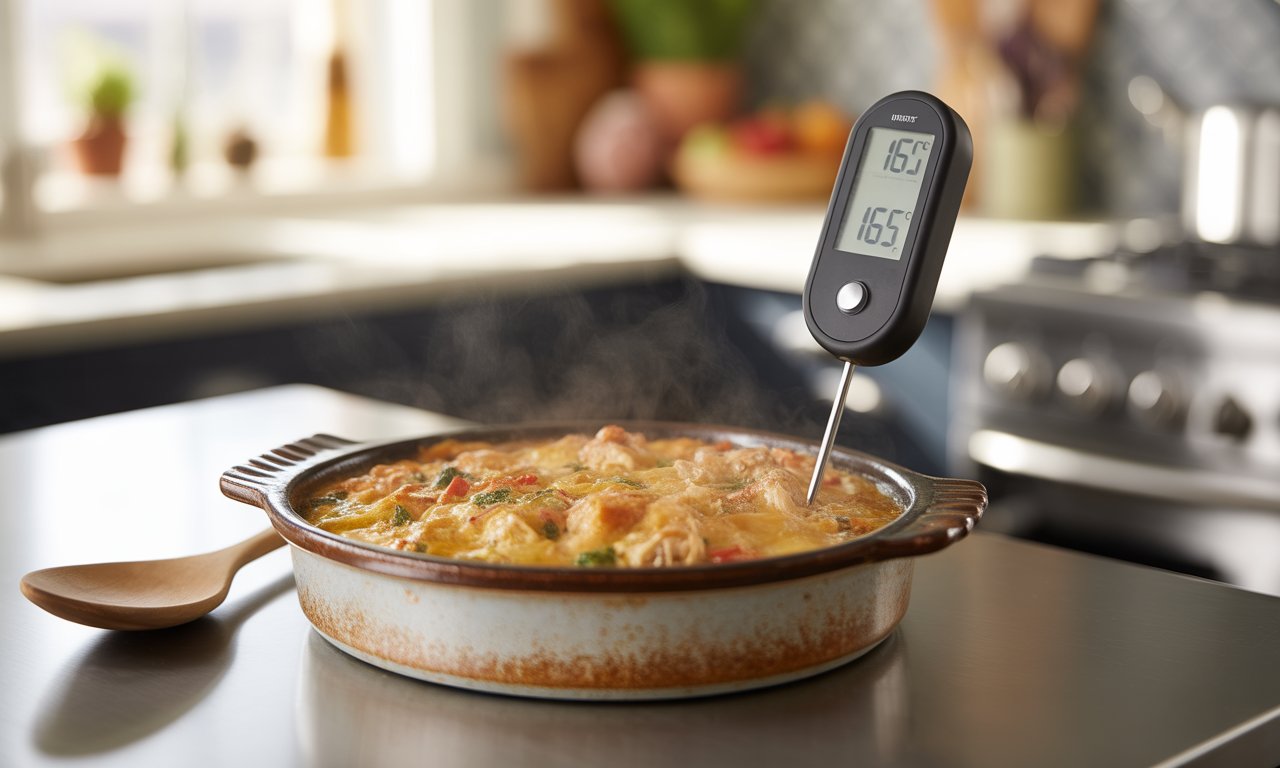
Reheating leftovers correctly completes the journey from fridge to fork. The goal is to raise the internal temperature above 165°F (74°C), enough to kill most bacteria and inactivate toxins. While microwaves offer speed, ovens and stovetops provide more even heat distribution—critical for thick stews and layered dishes.
Microwave ovens can leave cold spots where bacteria survive. Stirring halfway through heating or using a cover to trap steam helps achieve uniform temperatures. Alternatively, a conventional oven set at 325°F (163°C) can gently bring casseroles, roasts or rice dishes up to safe levels without drying them out.
- 🔥 Microwave: Stir every minute; cover with vented lid.
- 🍲 Stovetop: Use a heavy pan; stir frequently over medium heat.
- 🍳 Oven: Preheat to ≥325°F; bake until center reaches 165°F.
- 🌡️ Thermos method: For soups, pre-warm Thermos and pour in piping-hot broth.
- ⏲️ Avoid slow cookers: Reheating at low temps (
| Method | Ideal Temp | Time | Notes 🔍 |
|---|---|---|---|
| Microwave | 165°F+ | 2–5 min | Stir mid-cycle; check multiple spots |
| Oven | 325°F | 15–25 min | Cover dish to retain moisture |
| Stovetop | Medium heat | 5–10 min | Stir to avoid hotspots |
| Thermos | Pre-warmed | Instant | Best for soups & stews |
WebMD’s slideshow emphasizes that reheating soups to a full boil for at least three minutes kills heat-sensitive toxins in bacterial spores (source). For greater precision, a probe thermometer from OXO or Thermos can confirm safety without overcooking.
Next up: discover exactly how long each type of leftover remains safe under optimal conditions, so you never question your fridge’s contents again.

Recommended Shelf Life for Common Leftovers and Key Risk Factors
Knowing how long to keep leftovers reduces guesswork and safeguards health. In general, most cooked dishes—meats, grains, vegetables—should be consumed within 3–4 days when refrigerated at 40°F or below. Dairy-based items and seafood often last only 2–3 days, while hard cheeses can stretch to a week if tightly wrapped.
Freezing extends life considerably: most entrees remain palatable and safe for 2–3 months when vacuum-sealed or stored in freezer-grade Ziploc and FoodSaver bags at -18°C. However, even frozen foods can suffer from freezer burn or flavor loss if not sealed properly.
- ⏳ 3–4 days: Cooked meats, poultry, grains, veggies.
- 🥛 2–3 days: Creamy sauces, seafood dishes.
- ❄️ 2–3 months: Frozen casseroles in vacuum-sealed packs.
- 🧀 1 week: Hard cheeses, if well-wrapped.
- 🚨 Discard: Any leftovers left out >2 hours or >1 hour above 90°F.
| Food Type | Refrigerator Shelf Life | Freezer Shelf Life | Notes 📌 |
|---|---|---|---|
| Roast chicken | 3–4 days | 4 months | Slice before freezing |
| Cooked rice | 1–2 days | 6 months | Cool quickly; use shallow dish |
| Stews & soups | 3–4 days | 2–3 months | Package in single portions |
| Dairy-based pasta | 2 days | Not recommended | Sauces separate best |
Appliances First outlines similar timelines, noting that extending beyond recommended days increases the risk of Bacillus cereus in rice dishes (details). The Flex Kitchen warns against week-old meals, citing increased toxin buildup (read study).
Armed with these timeframes, you can plan meals without fear—and reduce discarded food dramatically. Let’s now explore creative ways to repurpose leftovers before they ever reach the bin.
Creative Strategies to Reduce Waste and Revitalize Leftovers 🍽️
Transforming leftovers into fresh dishes not only saves money but also sparks culinary creativity. From DIY grain bowls to breakfast frittatas, a little imagination turns yesterday’s dinner into tomorrow’s delight. For pet owners, though, caution is key: certain foods safe for humans can harm animals. For instance, onions and garlic in stews should never reach cats’ bowls (see why), and moldy bread discarded by people is doubly unsafe for pets (learn more).
Here are simple strategies to keep tastes exciting and your fridge lean:
- 🥗 Fusion bowls: Combine leftover grains with fresh veggies and a protein topping.
- 🍕 Mini pizzas: Use flatbread, leftover sauce, cheese and garnishes.
- 🍳 Breakfast scrambles: Toss diced meats and veggies into morning eggs.
- 🥣 Smoothie add-ins: Freeze ripe fruit bits for nutrient-packed blends.
- ❄️ Freezer meal packs: Assemble individual portions in Sistema or Ziploc bags.
| Recipe Idea | Main Ingredient | Prep Time | Waste Reduced 📉 |
|---|---|---|---|
| Grain Power Bowl | Leftover rice/quinoa | 5 min | ✔️ 1 meal |
| Vegetable Frittata | Cooked veggies | 10 min | ✔️ 2 meals |
| Stuffed Peppers | Meat & grains | 20 min | ✔️ 3 servings |
| Savory Pancakes | Mashed potatoes | 15 min | ✔️ 2 portions |
For safe human consumption, always follow best practices from Easy Healthy Foods (guide) and FoodsafePal (tips). When it comes to feeding furry friends, refer to Safe Canned Foods for Pet Owners (details) and guidelines on raw-meat safety (insights).
Embracing these approaches not only stretches your grocery budget but also champions sustainability—food never tasted so responsible.
Important FAQ on Leftover Safety
Q: How quickly should I refrigerate plates of food?
A: Always chill perishable items within 2 hours after cooking—or within 1 hour if ambient temperatures exceed 90°F—to minimize bacterial growth.
Q: Can I reheat leftovers more than once?
A: It’s safest to reheat only once. Repeated cooling and heating cycles raise the risk of bacteria surviving and multiplying.
Q: Are glass containers better than plastic?
A: Glass (like Pyrex) resists staining and retains fewer odors. But high-quality plastic—such as Tupperware or OXO—offers lighter weight and stackability. Choose based on your workflow and preferences.
Q: How do I know if leftovers have gone bad?
A: Trust a combination of smell, appearance and texture: foul odors, sliminess or discoloration indicate spoilage. Never rely solely on the “sniff test.”
Q: What’s the maximum fridge time for cooked rice?
A: Refrigerate cooked rice within 2 hours and use within 1–2 days to avoid Bacillus cereus toxin.