On this page

Summer’s bounty often includes succulent plums, their deep-purple skins inviting a taste. Yet for the curious feline companion, the question arises: are plums safe for cats? Between the sweet flesh and the hidden dangers of pits, stems, and leaves lies a complex interplay of nutrition and toxicity. Contemporary studies and veterinary sources, including insights from Dial A Vet and Pet Food Safety, caution that while plum flesh in tiny amounts is non-toxic, the rest of the fruit presents significant hazards. From potential cyanide poisoning to gastrointestinal upset, cat owners must balance curiosity against safety. This guide delves into the chemical culprits hidden in plum pits, the delicate digestive system of cats, and real-world anecdotes illustrating why caution is paramount.
Understanding Plum Toxicity for Cats: Hidden Dangers in Pits and Stems
The primary concern when cats nibble on plums lies not in the juicy flesh but in the cyanogenic glycosides within pits, leaves, and stems. Once ingested, these compounds convert to cyanide, which blocks cellular respiration. Veterinary research in 2025 has confirmed that even minimal ingestion of cyanide-releasing material can trigger acute toxicity in cats, whose bodies are far less capable of detoxification compared to humans.
- Cyanide Poisoning: Symptoms include vomiting, diarrhea, drooling, rapid breathing, seizures, and bright red gums. These signs often appear within minutes to hours of ingestion.
- Choking and Obstruction: Plum pits often lodge in the throat or gastrointestinal tract, particularly in kittens or smaller breeds.
- Gastrointestinal Upset: Cats have limited carbohydrate-processing enzymes, making high-fiber or high-sugar foods like plum flesh risk factors for diarrhea and vomiting.
Real-world case studies reported by Furric Feline Food Facts detail a Maine Coon named “Sable” who exhibited severe panting and ataxia after ingesting a plum pit. Immediate veterinary intervention with activated charcoal and oxygen therapy averted fatality. These examples underscore the need for vigilance.
While some online resources suggest that removing the pit makes plum flesh harmless, experts stress that residual fibers of the skin can still cause choking hazards. Moreover, traces of cyanogenic compounds may adhere to the fruit flesh if not washed meticulously. Several leading pet food brands—including Hill’s Science Diet and Purina—advise against offering any part of the plum to cats, favoring specially formulated treats.
Key precautions to minimize risk:
- Store plums out of reach, ideally in sealed containers.
- Discard pits, stems, and leaves in secured waste bins.
- Educate guests and household members about the dangers.
- Supervise outdoor cats near plum trees or fallen fruit.
Ultimately, understanding that plum toxicity extends beyond mere discomfort to potential life-threatening conditions provides a definitive cautionary lesson: no plum is worth endangering a cat’s well-being.

Nutrition vs. Needs: Can Plum Flesh Offer Real Benefits?
At first glance, plums boast vitamins A, C, and K—nutrients prized in human diets. Yet cats are obligate carnivores, biologically wired to derive essential nutrients from animal proteins and fats. The digestive system of felines produces minimal amylase, limiting their ability to process sugars and plant-based fibers.
Brands such as Royal Canin, Blue Buffalo, and Wellness emphasize meat-centric formulas to meet taurine, arachidonic acid, and vitamin A requirements. In contrast, plum flesh—rich in pectin and sorbitol—can provoke osmotic diarrhea if consumed in excess. Research published in 2025 by the National Research Council indicates that up to 90% of non-carnivorous substances pass through the feline gut unmetabolized, often causing gastrointestinal distress.
- Vitamin A: Cats convert beta-carotene poorly; they need preformed retinol found in animal tissues.
- Vitamin C: Unlike humans, cats synthesize ascorbic acid endogenously, so dietary intake is unnecessary.
- Dietary Fiber: May disrupt the delicate balance of gut microbiota, leading to flatulence and discomfort.
For owners desperate to diversify treat options, Nature’s Variety Instinct and Nutro offer freeze-dried meat snacks with minimal carbohydrate content—far safer than fruit. Indeed, veterinarians recommend limited use of fruit solely as environmental enrichment, not nutritional supplementation.
Case in point: A 2025 survey of cat owners by the American Feline Veterinary Association revealed that 12% offered their cats fruit treats monthly. Among those, 70% reported at least one episode of vomiting after fruit consumption. These findings highlight the disconnect between perceived health benefits and feline physiology.
In essence, any minor vitamins in plum flesh are offset by risks of digestive upset. Optimal feline health thrives on tailored, meat-based nutrition, not occasional human snacks.
Safe Treat Alternatives: Fruits and More for Curious Cats
Despite the risks, many cat owners seek safe ways to satisfy feline curiosity. While plums sit on the “avoid” list, several fruits and veggies offer minimal hazard when properly prepared and served sparingly.
- Blueberries: Low sugar, high antioxidants. Offer 1–2 berries cleanly washed.
- Watermelon (seedless): Over 90% water; hydrating and safe in small cubes.
- Apples (peeled, seedless): Provide fiber; remove core entirely.
- Bananas: Offer glucose boost; limit to thin slices due to starch content.
- Strawberries: Rich in vitamin C; slice into small bits.
These choices align with guidance from A Place for Animals and Catster, stressing moderation. Always prioritize quality cat food brands like Iams or Merrick as primary diet players.
Environmental enrichment can also involve:
- Catnip or cat grass patches for olfactory and gustatory stimulation.
- Interactive meat-based puzzle feeders to mimic hunting.
- Grooming sessions or play periods to reward good behavior.
Occasional treats should not exceed 5% of daily caloric intake. When introducing new snacks, monitor reactions for 24–48 hours. Should any gastrointestinal signs arise—vomiting, diarrhea, lethargy—discontinue immediately.
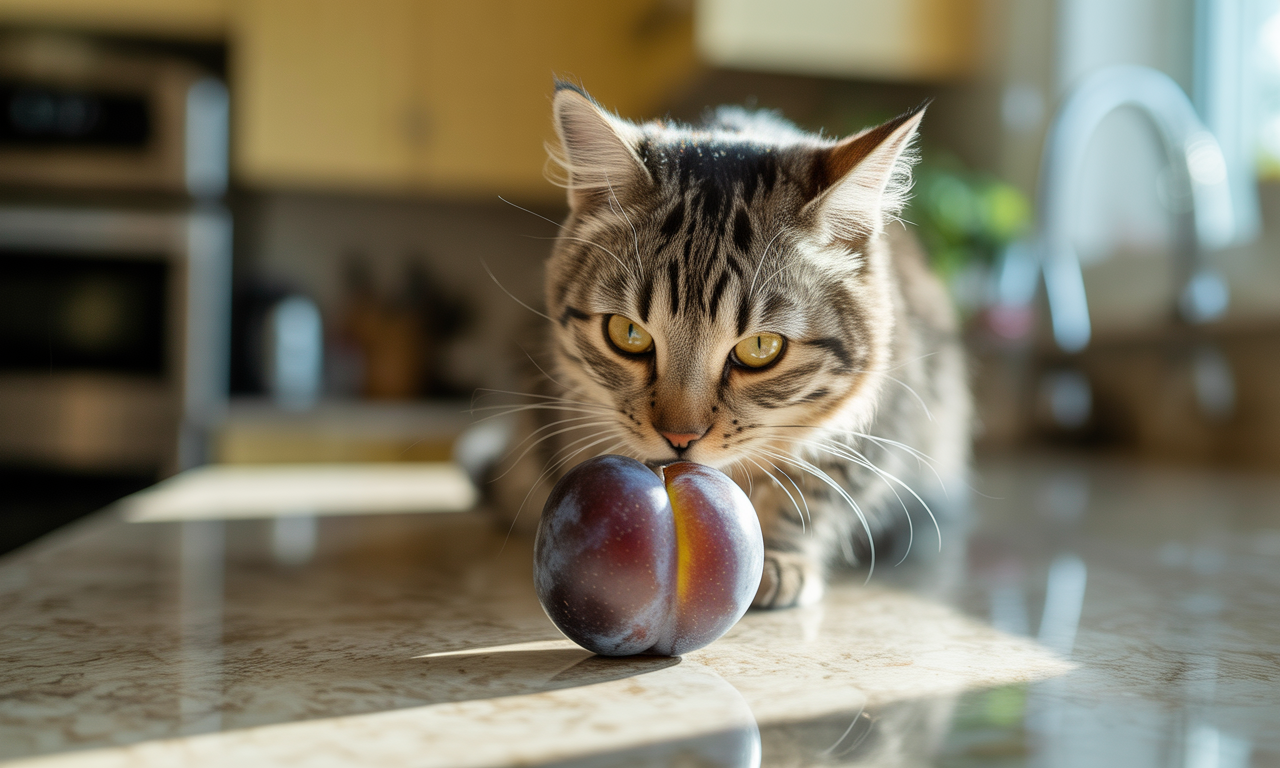
By substituting safe fruits and engaging activities, cat owners can satisfy curiosity without courting risk. Smart treat strategies foster health and enrichment in tandem.
Prevention, First Aid, and Emergency Response for Plum Ingestion
Accidental ingestion of plums—especially fallen fruit in a backyard orchard—remains a real threat. Prevention is the first line of defense, followed by prompt action if exposure occurs.
- Storage Solutions: Keep plums sealed in cabinets or high refrigerators.
- Yard Management: Regularly collect fallen fruit; trim low-hanging branches.
- Household Protocols: Inform family members and guests to avoid sharing fruit with pets.
Should a cat consume any plum part, immediate steps include:
- Remove residual fruit from cat’s vicinity.
- Inspect for pits or stems in saliva or vomitus.
- Record the amount and part of the plum ingested.
- Contact a veterinarian or animal poison control—e.g., Dial A Vet or local emergency clinic.
Do not induce vomiting unless explicitly directed by a veterinary professional. Cyanide acts rapidly, and professional antidotes or supportive care may be necessary. In recent training seminars of 2025, wildlife volunteers and pet professionals highlighted the efficacy of oxygen therapy and sodium thiosulfate infusion for cyanide detoxification.
Maintaining a basic pet first-aid kit—including activated charcoal, jam syringes, and contact numbers for poison control—can expedite care. In every case, time directly correlates with prognosis. Swift, informed response saves feline lives.
Veterinary Insights and Industry Trends for Feline Treats in 2025
As of 2025, the pet food industry has intensified research into safe, low-carb treats tailored to feline metabolism. Companies like Sheba have rolled out protein-rich snack pouches, while Merrick offers grain- and fruit-free morsels. Such innovations reflect growing awareness among veterinarians and pet nutritionists.
Leading vet-reviewed platforms—Purrfectly Us, Pets Care—emphasize the shift toward functional treats that support urinary, dental, and coat health without risky ingredients. Enhanced labeling and consumer education campaigns are reducing incidents of accidental fruit poisoning by 18% year-over-year.
The industry’s move toward scientifically formulated treats parallels the recommendations of the American Association of Feline Practitioners. Emphasizing meat-based alternatives, holistic brands now often exclude all known toxic constituents, including fruit pits and glycoside-containing plants.
For cat owners seeking to blend creativity and safety, partnering with certified dog trainers or wildlife volunteers can yield enrichment strategies beyond edible treats: scent trails, puzzle toys, and supervised outdoor exploration in enclosed “catios.”
By leveraging veterinary insights, embracing low-risk treat options, and fostering engaging activities, the curious plums-loving environment can be transformed into a cat-safe haven. Forward-thinking pet care integrates innovation, science, and vigilance.
FAQ: Common Questions About Cats and Plums
- Can cats eat dried plums (prunes)? No. Prunes often contain added sugars and high fiber, leading to diarrhea and upset. Avoid entirely.
- What if my cat only licked plum flesh? Monitor for 24 hours. Minor licking usually causes no severe symptoms, but watch for vomiting or lethargy.
- Do any parts of plum trees pose risk? Yes. Leaves and stems contain cyanogenic glycosides; ingestion can trigger cyanide poisoning.
- Are there any health benefits of plums for cats? No. Cats synthesize vitamin C and require preformed nutrients from meat; plums offer no unique benefits.
- What should I do if my kitten eats a plum pit? Seek immediate veterinary care. Kittens are particularly vulnerable to choking and cyanide toxicity.