On this page
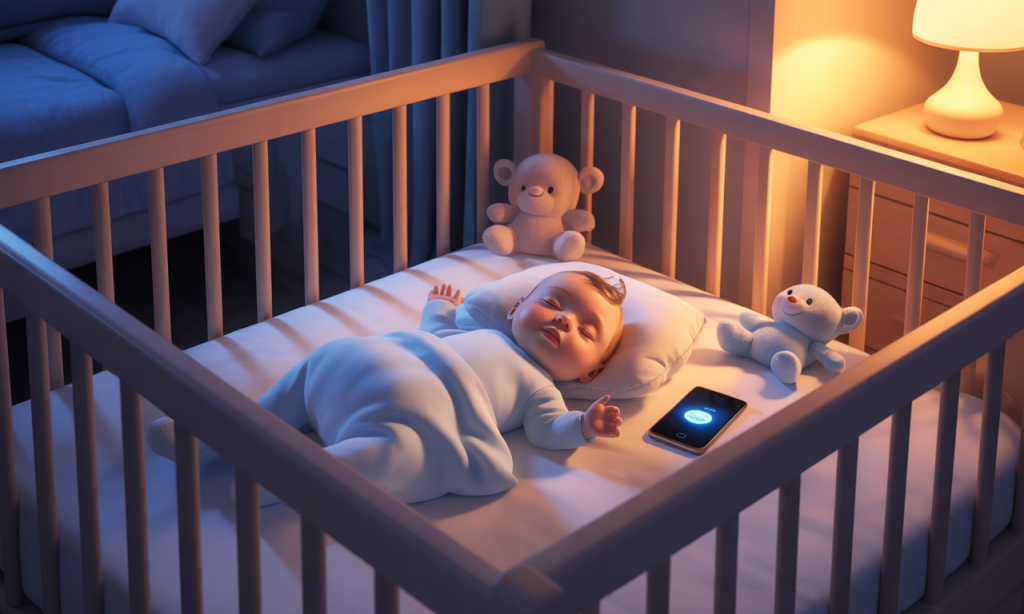
Nursery nights now often blend the hush of a crib with the soft glow of a smartphone screen. Across urban apartments and suburban homes, parents juggle the convenience of tracking apps, lullaby playlists, and white noise generators on devices by Apple, Samsung, Google, and Motorola. Yet this convenience raises urgent questions: Could electromagnetic fields from a OnePlus device disrupt an infant’s budding neural pathways? Does blue light from a Sony or Huawei phone delay the release of melatonin in a newborn’s delicate circadian rhythm? Parenting educators and pediatric nurses point to the need for clarity and evidence-based strategies when integrating technology into sleep routines. Reliable insights from sources such as Natural Parenting Center and Educate EMF are helping caregivers navigate a landscape where VTech monitors hum quietly by the crib, and Philips white-noise machines compete with smartphone alarms.
Drawing on guidelines from global authorities—WHO research agendas, Health Protection Agency findings, and 2025 updates on radiofrequency safety—this article explores how to balance a tech-friendly nursery with the priority of safe infant sleep. From setting a defined “smartphone curfew” to choosing devices with lower emission ratings, parents can craft a sleep environment that respects both modern lifestyles and the science of restorative rest. Detailed sections that follow will unpack risks, demystify electromagnetic fields, examine blue light’s impact, suggest practical exposure reductions, and spotlight emerging device designs to guide caregivers through each overnight challenge.
Potential risks of smartphone exposure during infant sleep
Smartphones in close proximity to a sleeping baby pose a triad of concerns: electromagnetic field (EMF) radiation, disruptive blue light emissions, and subtle interruptions to breathing patterns from background notifications. Infants’ skull bones are thinner, and their developing brains absorb radiofrequency energy more readily than adults. Studies published in JAMA Pediatrics and progress reports by the Health Protection Agency (HPA) highlight that repeated nighttime exposure may intensify cellular stress in sensitive tissues. Further, notifications from apps on Nokia handsets or OnePlus models can trigger micro-arousals that fragment sleep architecture.
Parents often underestimate how frequently a “silent” phone buzzes—fitness trackers syncing, software updates in the background, or recruitment apps pinging. Each instance can nudge a baby from deep to light sleep, reducing slow-wave cycles crucial for growth hormone release and cognitive consolidation. Beyond sleep structure, electromagnetic interference could hypothetically alter calcium signaling in neurons, though consensus is still evolving. Key studies, including research funded by the Nordic Radiation Safety Authorities, report mixed findings. Yet caution remains warranted given infants’ prolonged daily rest phases.
- Sleep fragmentation: Alerts and vibrations can produce arousals lasting seconds, adding up to fragmented rest.
- EMF absorption: Infants absorb up to 60% more radiofrequency energy than adults when devices are near their head.
- Neurodevelopmental sensitivity: Early-life exposure to environmental stressors may influence synaptic pruning during critical growth windows.
- Respiratory variances: Phones left under pillows can slightly raise local temperature, possibly affecting breathing comfort.
- Behavioral habituation: Associating nighttime calm with device sounds could hinder self-soothing capacities.
Given these multifaceted risks and the rapid pace of smartphone innovation, caregivers are encouraged to review hospital-grade studies and reputable portals like EMF Portal and Hello Doctor. Understanding how bedtime routines intersect with mobile technology represents the first step toward reducing unnecessary exposure. Insight: Minimizing nighttime smartphone proximity can safeguard critical growth-promoting sleep phases.

Understanding electromagnetic fields and baby safety
Electromagnetic fields (EMFs) emanate from any active mobile device—even when not in active calls. Networks by Google Fi or Vodafone rely on radiofrequency waves oscillating between 800 MHz and 2.6 GHz. A sleeping infant’s head placed within 30 cm of a device may soak up significantly more energy than an adult’s, potentially crossing thresholds recommended by bodies like the Health Physics Society (HPS). In 2025, the HPS reaffirmed that precautionary measures are prudent, especially for children under two years old
What are radiofrequency EMFs?
Radiofrequency EMFs represent a form of non-ionizing radiation. Unlike X-rays, they lack the energy to break chemical bonds directly, but they can induce thermal and non-thermal effects at the cellular level. Devices by Motorola and Nokia, as well as Wi-Fi routers from Huawei, all contribute to the ambient RF environment. Infants have a higher water content in tissues and thinner skulls, factors that can amplify absorption.
Guidelines for safe cell phone distances
Various organizations propose distance-based safety margins. Recommendations typically include:
- Minimum 1 meter away: Most studies, including Beat EMF, endorse at least one meter between device and infant.
- Airplane mode at night: Disabling wireless transmitters halts RF emissions.
- External speaker or paired Bluetooth: Place the phone across the room and play lullabies via a Philips white-noise machine or VTech monitor.
- Wired connections: Use Ethernet or USB-based audio players to avoid Wi-Fi pulses.
- Router placement: Keep home hotspots outside the nursery and direct antennas away from the crib.
Experts at Educate EMF and EMF Portal stress that these guidelines form the basis for a low-exposure environment. Even carriers like T-Mobile and AT&T recommend turning on airplane mode to minimize background communication.
Implementing distance-based precautions around the crib and opting for alternative audio devices can limit EMF exposure without dismantling modern parenting conveniences. Insight: Prioritizing a one-meter distance and leveraging wired or low-emission audio sources offers significant protective benefits against radiofrequency fields.
Blue light effects on infant circadian rhythms
Beyond EMF considerations, the spectrum of visible light emitted by smartphone screens warrants careful attention. Blue wavelengths (400–490 nm) are particularly adept at suppressing melatonin, the hormone that signals sleep onset. Classic studies by Brainard and Sliney (2008) and Lockley et al. (2003) demonstrated that even brief exposure to short-wavelength light can shift circadian phases by up to 90 minutes. For infants, whose retinal pigment epithelium is not fully matured, susceptibility to blue light hazards increases.
In 2025, Harvard Medical School reissued guidelines emphasizing minimal screen exposure within one hour of bedtime, a recommendation echoed by Lovevery and BabyCenter UK. Parents who place a Google Pixel or Samsung Galaxy Active Edge near a dozing newborn risk silent melatonin suppression. Furthermore, anecdotal reports from parenting forums such as BabyCenter India note increased night-waking incidents correlated with device use in adjoining rooms.
- Melatonin disruption: Blue light delays natural sleepiness, leading to later bedtimes and fragmented naps.
- Eye strain: Prolonged viewing of screens by infants can cause ocular fatigue and decreased blink rate.
- Circadian misalignment: Altered sleep-wake cycles may impact feeding schedules and daytime mood.
- Long-term risk: Chronic circadian disruption is associated with metabolic and immunological imbalances, underscored by Nordic Radiation Safety data.
- Screen-free buffer: Implementing a digital curfew at least one hour before naptime or bedtime is recommended by experts.
Choosing devices with night-shift modes or built-in blue-light filters—from OnePlus’ Warp Charge displays to Sony’s low-emission settings—can mitigate some impact, but the safest choice remains complete absence of screen time near sleep periods. Insight: Enforcing a screen-free interval ahead of sleep helps preserve an infant’s natural circadian rhythm and promotes deeper, restorative rest.

Practical strategies to minimize exposure near sleeping babies
Creating a tech-balanced nursery involves forethought, planning, and the right mix of tools. Beyond merely distancing smartphones, parents can incorporate several practical measures to protect infant sleep quality and overall well-being. Leveraging resources like BabyCentre UK and Beat EMF, caregivers report success by combining environmental modifications with household routines.
- Adopt airplane mode: Ensure all phones—including Apple iPhones and Huawei devices—are set to airplane mode during designated sleep hours.
- Use safe wireless chargers: Position Qi pads or MagSafe chargers at least 50 cm from the crib (tipsforsafety.com/safe-wireless-chargers/).
- Choose low-EMF audio: Opt for wired speakers or a Philips white-noise unit instead of streaming directly from a smartphone.
- Introduce white noise: Safe white noise machines can mask sudden notifications—review guidelines at tipsforsafety.com/babies-white-noise-safety/.
- Monitor air quality: Combine a dehumidifier positioned away from the nursery with an air purifier; learn more at tipsforsafety.com/safe-dehumidifiers-indoor-air/.
- Night-time routines: Encourage calming rituals—gentle massage, storytime—to reduce reliance on digital lullabies.
- Strategic cable routing: Keep charging cables out of baby’s reach and away from the crib zone.
Parents of twins at a community center in Boston reported dramatic reductions in night-wakings after relocating Mini Samsung Galaxy phones to a hallway shelf, pairing lullabies via a VTech system. Anecdotal evidence aligns with studies underlining the value of environment-driven sleep hygiene over device-centric fixes. Insight: Layering simple environmental controls and device settings empowers caregivers to maintain modern conveniences without compromising infant sleep health.
Role of devices and future guidelines for parents
As technology evolves, so do opportunities for safer nurseries. Major manufacturers—from Apple and Samsung to Motorola, OnePlus, and Sony—are investing in lower-emission designs and custom “child mode” features. Nokia’s forthcoming handset promises an ultra-low RF profile, while Huawei prototypes integrate intelligent night-vision sensors in baby monitors. Meanwhile, VTech and Philips continue to refine audio-only white-noise machines that run on AA batteries, entirely eliminating wireless pulsing.
In 2025, regulatory agencies encourage manufacturers to publish specific absorption rate (SAR) data for standby and active modes. Parents can consult updated international databases or check guides like Bibino to verify that a chosen smartphone or monitor model remains within conservative exposure limits. Brands are responding: Apple’s next iOS release will feature a “Crib Mode” with automatic blue-light reduction and RF suppression. Samsung’s Galaxy Family Hub now includes a nursery dashboard that tracks device proximity and issues gentle audio reminders.
- Published SAR ratings: Select phones with the lowest standby values, available on carrier and manufacturer websites.
- Dedicated nursery apps: Use child-safe platforms from Google’s Family Link or OnePlus’s Telecom Manager to enforce distance rules.
- Future-proof innovations: Anticipate LiFi (light-based internet) baby monitors, which transmit data via LEDs rather than radio waves.
- Third-party certifications: Look for EMF Shield or Nordic Radiation Safety seals when purchasing new devices.
- Continuous updates: Follow professional parenting educators and pediatric nurses in online forums like Horus X.
Innovation is steering the next generation of child-safe devices, but parental vigilance remains paramount. By choosing low-emission hardware and leveraging built-in protective features, caregivers can welcome tomorrow’s technology without compromising infant well-being. Insight: Aligning device selection with official SAR disclosures and emerging cradle-to-cradle standards paves the way for safer slumbers.
FAQ
- Can a baby monitor replace a smartphone near the crib?
Yes. Dedicated monitors from VTech or Philips often use lower power frequencies and can be placed at recommended distances without compromising safety. - Is airplane mode enough to block all EMF emissions?
Airplane mode disables cellular, Wi-Fi, and Bluetooth transmitters, but some background antennas (NFC) may remain active. Confirm via device settings. - How far should I keep my smartphone from the baby’s head?
Most experts advise at least one meter. For extra caution, position devices across the room or in airplane mode on a shelf. - Do cordless phone bases pose the same risks as smartphones?
Cordless bases emit continuous DECT frequencies; many parents replace them with low-EMF baby monitors. Check certifications on tipsforsafety.com/electric-toothbrush-safety/ for analogous guidelines. - Can blue-light filter apps protect my infant?
While night-shift filters reduce melatonin suppression, the safest approach remains eliminating screen exposure at least one hour before sleep.